
AI Plugins vs MCP Servers: Understanding the Evolution of AI Integrations in 2026
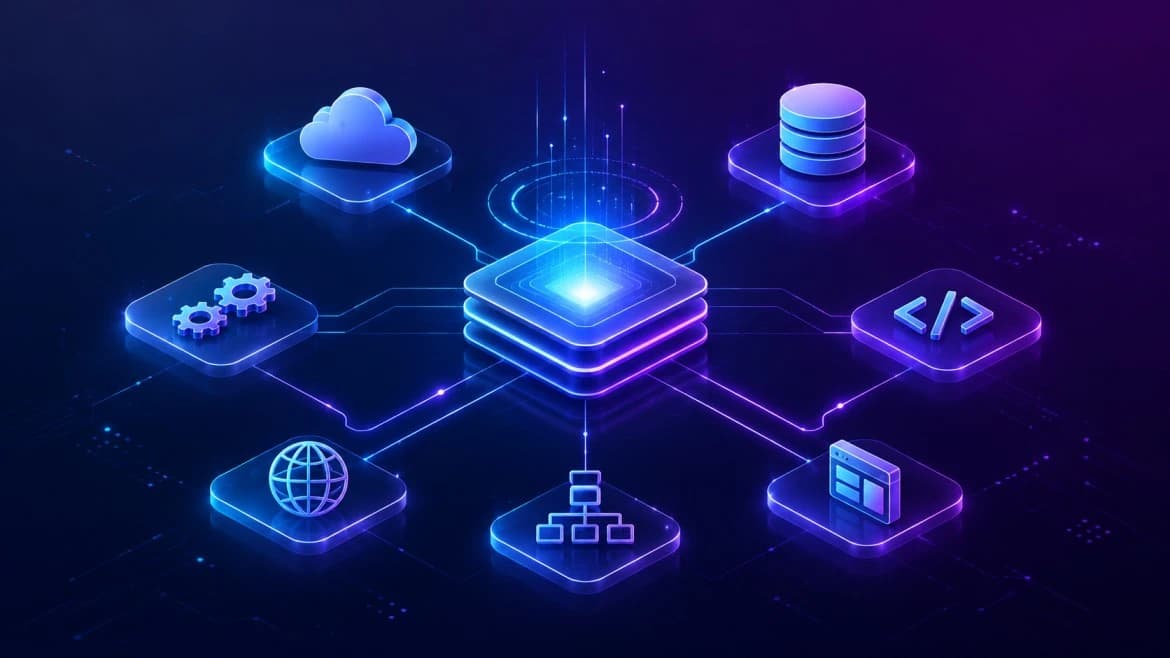
AI Plugins vs MCP Servers: Understanding the Evolution of AI Integrations in 2026
Introduction
The rapid rise of AI agents has created an important challenge.
How can AI systems interact with the tools, applications, and data businesses rely on every day?
The first answer came in the form of plugins.
Plugins enabled AI models to access external capabilities and perform actions beyond simple conversations.
However, as AI ecosystems matured, developers realized that maintaining separate integrations for every platform was becoming increasingly complex.
This led to the emergence of Model Context Protocol (MCP), a standardized approach that allows AI agents to communicate with tools and systems in a more flexible and scalable way.
As AI adoption accelerates, understanding the differences between plugins and MCP servers is becoming essential for developers and organizations building AI-powered applications.
The Rise of AI Plugins
Plugins represented an important milestone in AI evolution.
They enabled language models to:
- Retrieve information
- Access APIs
- Perform calculations
- Trigger workflows
- Interact with external services
Popular plugin use cases included:
- Travel booking
- Data analysis
- Calendar management
- CRM interactions
- Knowledge retrieval
Plugins transformed AI from chat interfaces into interactive assistants.
The Limitations of Plugins
Although plugins expanded AI capabilities, they introduced several challenges.
Platform Dependency
Many plugins were tightly coupled to specific AI platforms.
Developers often needed separate implementations for different ecosystems.
Integration Complexity
Maintaining multiple plugin architectures increased development effort.
Limited Discoverability
AI systems often struggled to dynamically understand available tools.
Scalability Issues
As organizations integrated more services, managing plugin ecosystems became increasingly difficult.
Enter Model Context Protocol (MCP)
MCP introduces a more universal approach.
Think of it as a standardized interface for AI.
Instead of creating separate plugins for each platform, developers expose capabilities through MCP servers.
AI agents can then:
- Discover tools dynamically
- Query databases
- Access APIs
- Search documentation
- Execute workflows
- Interact with enterprise systems
This dramatically simplifies integrations.
Plugins vs MCP Servers
| Feature | Plugins | MCP Servers |
|---|---|---|
| Platform Specific | Yes | No |
| Dynamic Tool Discovery | Limited | Yes |
| Standardized Interface | Partial | Yes |
| Enterprise Friendly | Moderate | High |
| Scalability | Moderate | Excellent |
| Future AI Agent Support | Limited | Strong |
Why MCP Matters for AI Agents
AI agents are becoming more autonomous.
Modern agents need access to:
- Databases
- Git repositories
- Business applications
- Documentation
- APIs
- Internal knowledge bases
MCP provides the infrastructure that enables these interactions.
Without structured access to tools, AI agents remain isolated chatbots.
With MCP, they become intelligent digital coworkers.
Real-World Examples
Software Development
AI agents can:
- Search GitHub repositories
- Analyze code
- Generate pull requests
- Access documentation
Customer Support
Agents can:
- Retrieve customer history
- Query CRM systems
- Generate responses
- Escalate issues
Analytics
AI systems can:
- Query databases
- Generate reports
- Explain trends
- Detect anomalies
Internal Knowledge Systems
Organizations can expose:
- Policies
- Documents
- Wikis
- Knowledge bases
through MCP servers.
Why Developers Are Excited
MCP reduces fragmentation.
Instead of maintaining multiple integrations, developers can:
- Build once
- Reuse everywhere
- Improve maintainability
- Accelerate development
This creates a more open AI ecosystem.
The Future of AI Integrations
The industry is moving toward:
- AI agents
- Tool ecosystems
- Interoperability
- Context-aware systems
- Standardized communication protocols
MCP servers are likely to become a critical layer in this new architecture.
Much like APIs transformed software development, MCP may transform how AI systems connect to the digital world.
Conclusion
Plugins were an important step in AI evolution.
But the future requires something more flexible, scalable, and interoperable.
Model Context Protocol provides that foundation.
As AI agents become increasingly capable, standards like MCP will enable them to interact with tools, systems, and knowledge sources in meaningful ways.
Organizations that understand these technologies early will be better positioned for the next wave of AI innovation.
Frequently Asked Questions
What is an AI plugin?
An AI plugin extends the capabilities of language models by allowing them to interact with external services and APIs.
What is an MCP server?
An MCP server exposes tools and resources in a standardized way, allowing AI agents to discover and use them dynamically.
Are MCP servers replacing plugins?
Not immediately. However, MCP provides a more scalable and interoperable approach for future AI ecosystems.
Why are developers interested in MCP?
MCP reduces integration complexity and enables more powerful AI agents.
Will AI agents depend on MCP?
Many future AI systems are expected to leverage protocols like MCP to access tools and context dynamically.
About MYWE Technologies
MYWE Technologies a premier software company in Thrissur,Kerala, helps organizations adopt emerging technologies including AI agents, MCP architectures, intelligent automation, and custom software solutions.
Our mission is to build connected, context-aware systems that enable businesses to unlock the full potential of AI.
Related Articles
 Artificial Intelligence
AI Observability: Why Monitoring AI Systems Is the Next Big Enterprise Challenge
 Artificial Intelligence
Edge AI vs Cloud AI: Choosing the Right AI Strategy for Your Business
 Artificial Intelligence